
Quality is aninstrument reading.
Precision you can measure.
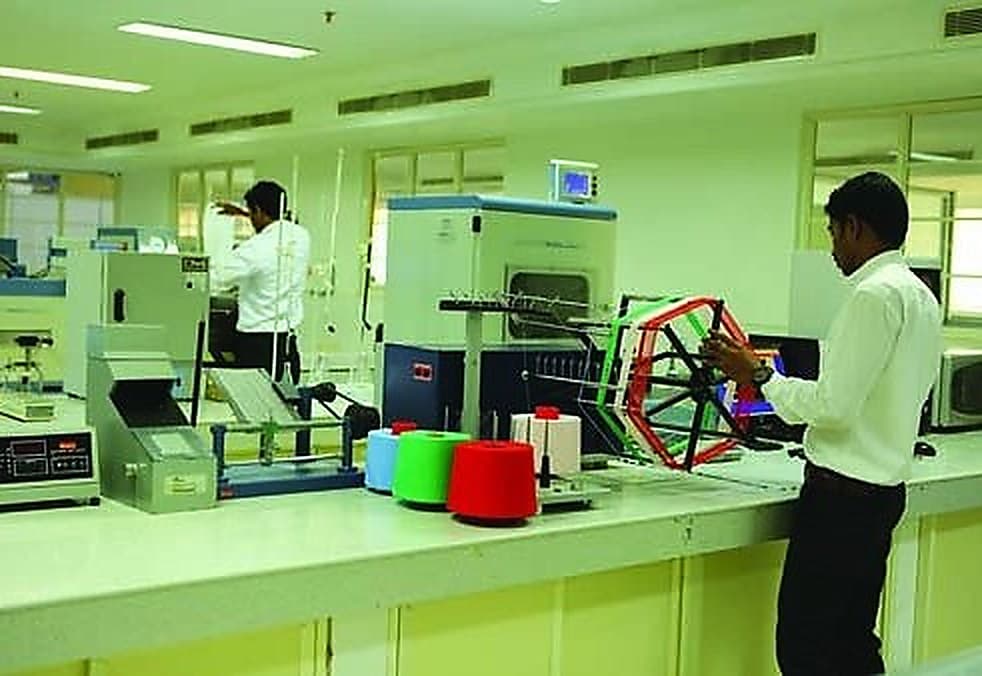
Quality on a childrenswear line is not an opinion held at the end of the process. It is a set of instrument readings taken along it.
Yarn quality
Input tested against the fabric specification it is committed to before knitting begins.
Fabric stability
Dimensional stability set at finishing, so a garment still fits after the washes that follow.
Colour consistency
Recipes prepared by digital dispenser and read by spectrophotometer, then transmitted electronically to the customer.
Needle detection
Every finished garment is passed through needle detection. Metal contamination is excluded physically, not sampled for.
Product safety
Produced to Oeko-Tex Standard 100 Class I, the tier reserved for articles worn by babies and toddlers.
Regulatory compliance
CPSIA for the United States and REACH for the European Union, applied across the dyed and printed range.
Needle detection is not a sampling exercise.
A broken sewing needle in an infant garment is not a defect to be caught statistically. Every finished garment passes through needle detector machines before it can be packed, so metal contamination is excluded physically rather than estimated.
Colour is handled the same way. A spectrophotometer reads shade electronically and transmits the reading to the customer, which removes human judgement from the one decision buyers reject most often.
Independently verified
Facilities are audited periodically by independent agencies and by auditors appointed directly by customers.
- WRAPPlatinum
The highest level of certification awarded to an apparel producing facility under the WRAP programme.
- Oeko-Tex 100Class I
Tested for harmful substances against the class reserved for articles worn by babies and toddlers.
- C-TPATLow risk
Assessed as low risk, with compliance scores published above ninety percent.
- Sedex
Member of the ethical trade data exchange used by buyers to assess supply chain conduct.
- CPSIA
Children's product safety requirements applied to goods entering the United States.
- REACH
European chemical compliance framework applied across the dyed and printed range.